
Skip to content

Same-day emergency tarping

(855) 741-ROOF
Dimensional Pro Construction
Roofing work in the Dallas-Fort Worth area

January 20, 2025

A Homeowner's Guide to Roof Installation and Repairs

Whether your roof needs a repair or a full installation, it helps to know how a roof is put together. It makes quotes easier to compare and makes it easier to spot shortcuts.

Not sure what shape your roof is in?

Free inspection scheduled within 24 hours. Free, with photos you keep.

How a roof is built, layer by layer

From the bottom up, a typical shingle roof in North Texas has:

  • Decking. Plywood or OSB sheets nailed to the rafters. Everything else sits on this.
  • Drip edge. Metal along the eaves and rakes that directs water into the gutters and keeps it off the fascia.
  • Leak barrier. A self-adhering membrane in valleys, around penetrations and along the eaves, where water is most likely to get under shingles.
  • Underlayment. A synthetic sheet over the rest of the deck as a second line of defense.
  • Starter strips. A row along the edges that seals down the first course of shingles against wind.
  • Shingles. Nailed in a specific pattern set by the manufacturer.
  • Flashing. Metal where the roof meets walls, chimneys and skylights.
  • Vent boots and ventilation. Seals around pipes, and vents that let hot, damp air out of the attic.
  • Ridge caps. The finishing shingles along the peaks.
  • The installation process

    A replacement usually goes like this:

  • Protect landscaping and set up for debris
  • Tear off the old roof down to the decking
  • Replace any damaged decking
  • Install drip edge, leak barrier and underlayment
  • Install new flashing, vent boots and ventilation
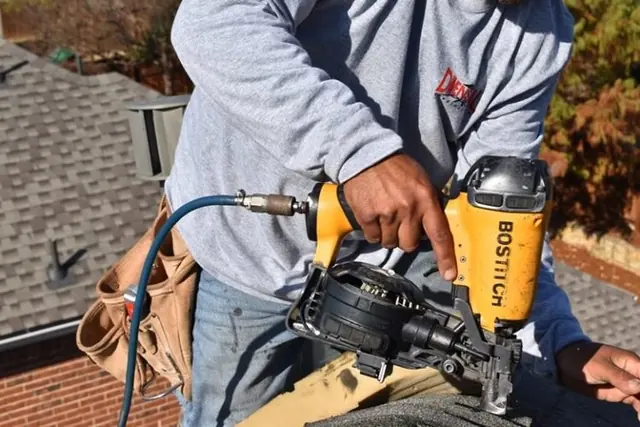
  • Install shingles and ridge caps to the manufacturer's specifications
  • Clean up, including magnetic sweeps for nails
  • Final walkthrough and photos
  • Most houses take one or two days.

    Signs your roof needs repair

  • Water stains on ceilings or the tops of walls
  • Missing, lifted or cracked shingles
  • Granules collecting in gutters
  • Flashing pulling away from walls or the chimney
  • Cracked rubber around plumbing vents
  • Daylight or damp spots in the attic
  • What makes a repair last

    Most leaks start at a single point, and the stain inside is often a few feet away from it. A good repair traces the water to where it enters and fixes that point properly:

  • Cracked vent boots replaced, not covered in sealant
  • Flashing replaced or refastened, not caulked over
  • Replacement shingles matched and sealed down
  • Photos before and after
  • If the damage is spread across the roof, or the roof is near the end of its life, a repair will not hold for long. A good roofer will tell you that.

    Getting started

    We handle both repairs and full installations across Justin and the Dallas-Fort Worth area. Every job starts with a free inspection. Call (855) 741-ROOF.

    Get a free roof inspection

    No cost, no obligation, and a photo report you keep either way. If there is nothing wrong with your roof, we will tell you that.

    We answer or call back in under 15 minutes during business hours.

    Free inspection scheduled within 24 hours.

    Emergency tarping on site the same day.

    Prefer to talk to someone?(855) 741-ROOF

    Water coming in right now? We tarp same day.

    Want to pay monthly? See financing options.

    Preferred inspection window

    No obligation and no cost. We answer or call back in under 15 minutes during business hours. We never sell your information.

    Call NowFree Inspection