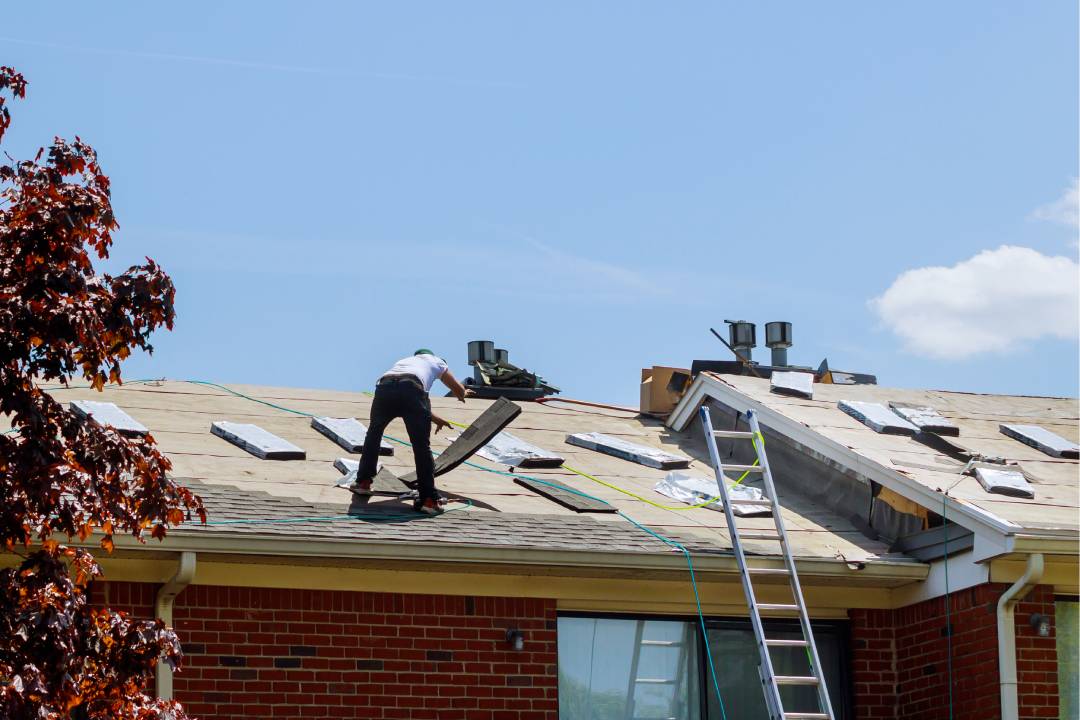


Introduction
Even a roof that looks fine from the ground can have long-term problems from wind damage. Damaged seals and missing granules, small leaks, lifted shingles and loose flashing can worsen with each storm. A professional inspection helps DFW homeowners catch damage early and avoid costly repairs later.
Wind Damage can slowly weaken your roof by lifting shingles, loosening flashing, breaking seals, exposing underlayment and allowing water to get into places you may not see right away. Even a little bit of wind damage can cause leaks, wood rot, insulation problems, mold growth and costly roof repairs down the road.
First, Why Wind Damage Is Hard to Detect
Many homeowners look outside after a storm and see the roof is still there and assume all is well. This is understandable. Not all wind damage is as obvious as a downed tree or a missing section of roof.
The problem is that wind can damage the roof in subtle ways. It can lift shingles just enough to break the adhesive seal underneath. It can loosen flashing around vents and chimneys. It can bend, crease, or shift shingles without tearing them off completely.
From the ground, the roof may look mostly normal. But once the seal is broken, the next rainstorm can push water under the shingles. That is when a small wind issue becomes a leak, and the leak becomes a larger repair.
This is especially important for homeowners in Dallas-Fort Worth. Strong winds, hail, heavy rain, and sudden storms are common in North Texas. A roof that handled one storm may not be ready for the next one if hidden damage was never repaired.
The Long-Term Effects of Wind Damage on Roofing Systems
Lifted Shingles Can Break the Roof’s Seal
Shingles are designed to overlap and seal together. That seal helps protect the roof from wind-driven rain. When strong wind lifts a shingle, the seal can break even if the shingle falls back into place afterward.
This type of damage is easy to miss. The roof may not look damaged from the yard, but the shingle may no longer be fully secured. Once the seal is broken it is easier for the future wind to lift it up again. That area is then more susceptible to leaking and further loss of shingles.”
If you notice irregular lines of shingles, lifted edges or shingles that appear a little rolled after a storm, it might be time to set up a wind damage roof repair DFW service.
Small Leaks Can Turn Into Interior Water Damage
Wind damage often leads to water problems. Once rain gets under shingles or through loosened flashing, it can move into the roof decking, attic, insulation, ceilings, and walls.
At first, the signs may be small. You might see a faint ceiling stain, a musty smell in the attic, or damp insulation after a heavy storm. Most homeowners delay repairs because the leak appears minor. Unfortunately, if the source isn’t fixed, water damage rarely stays minor.
Moisture left unattended can lead to wood rot, mold, drywall damage and a decline in insulation performance over time. What may have been an easy roof repair can turn into a much larger interior renovation project.
Skin Aging Speeded Up by Exposure
Wind damage can leave parts of the roof exposed that should not be exposed to the elements. Missing or damaged shingles can lead to the underlayment and roof decking being exposed more to the sun, rain and changes in temperature.
Even if water doesn’t get in right away, the exposed areas can age more quickly than the other parts of the roof. Heat dries things out. Rain can eat away at layers of protection. Repeated storms may deepen the damage.
That’s one reason to check early for wind damage. Often a small damaged area can be repaired before it spreads to a larger section of the roof.
Loose Flashing Provides Concealed Entry Points
Flashing is used at the edges of the roof, around chimneys, skylights, vents and other openings. These areas are naturally more vulnerable as they break the main roof surface.
Strong winds can pull sealant off the surface, loosen flashing, or bend metal pieces. Then rain can come in through tiny gaps. These leaks often appear in the house a long way from the actual point of entry, making it more difficult for the homeowner to track.
A professional inspection can identify loose flashing before it becomes a serious leak. This is especially important after major storms or repeated high-wind events.
Wind-Damaged Gutters Can Affect Roof Drainage
Wind does not only affect shingles. It can also loosen gutters, pull downspouts away, and push debris into drainage areas. When gutters stop moving water away from the roofline, water can back up under shingles or spill near the foundation.
Poor drainage can make roof problems worse. If water is not directed away from the home, it can damage fascia boards, siding, landscaping, and the foundation. That is why a complete storm inspection should include the roof, gutters, downspouts, flashing, and exterior drainage points.
What Roof Wind Damage Looks Like in Dallas TX
Homeowners searching for roof wind damage Dallas TX often want to know what they should look for before calling a contractor. A roof inspection is the safest way to confirm damage, but there are a few warning signs you can check from the ground.
You might see missing shingles, shingles with lifted edges, loose pieces scattered around the yard, damaged flashing, bent vents, exposed underlayment, or granules accumulating near the gutters and downspouts. After a rain, look for ceiling stains, attic moisture, peeling paint or damp smells inside the home.
In Fort Worth and nearby areas, wind can also crease shingles. Creased shingles are usually a sign that the wind lifted the shingle hard enough to bend it. If you see or suspect wind damaged shingles in Fort Worth, do not wait for a leak before scheduling an inspection.
Why Delaying Repairs Can Cost More Later
Wind damage is one of those problems that often gets worse quietly. A small opening in the roof may not cause visible damage right away. But every new storm can push more water into the same weak area.
Putting off repairs can cost you more as the damage can spread beyond just the roof surface. You may find yourself facing damaged decking, insulation replacement, drywall repair, interior painting or mold treatment what a few shingles or a flashing repair would have cost you.
And there is also the matter of timing. If a roof is damaged by one storm, and then is hit again before it is repaired, the second storm can make things worse. Early inspection puts you in control and helps you make a smart decision before the damage escalates.
Fix it or Toss it: Which one is smarter?
Not every wind-damaged roof needs to be replaced. In many cases, the problem can be fixed with targeted repairs. If only a small section is involved and the rest of the roof is in good shape, repair may be the best option.
Replacement may be suggested if the damage is extensive, the roof is aging, the shingles are failing on multiple slopes, or the repairs are not working anymore. A roof with lots of loose shingles, frequent leaks or major storm damage may be beyond repeated patching.
The best answer is a professional inspection. A good contractor will tell you what they see, show you photos if they can, and help you figure out if you’ll be better protected in the long run with repair or replacement.
Local DFW Experience Importance
Roofing in North Texas is not like roofing in more temperate climates. DFW homes face high winds, hail, sudden temperature changes, intense sun and heavy rain. These conditions can shorten the lifespan of roofing systems.
A local contractor understands the impact of weather patterns on shingles, flashing, gutters and roof ventilation. They also know what typical storm damage looks like in the area and how to inspect for problems that may not be visible from the ground.
For homeowners, local experience matters because the goal is not just to fix visible damage. The goal is to protect the home from the next storm.
Why Homeowners Call Dimensional Pro Construction
Dimensional Pro Construction helps DFW homeowners inspect, repair, and restore roofing systems affected by wind, hail, and storm damage. Their team understands how North Texas weather affects residential roofs and exterior systems.
When you call Dimensional Pro Construction we begin by assessing the true condition of your roof. The aim is to clearly identify damage, explain your choices in simple terms and recommend the right solution for your home.
For minor roof repairs, storm restoration, or help understanding what to do next following wind damage, working with an experienced local team can help you avoid guesswork and protect your property.
Set an Appointment for a Wind Damage Roof Inspection
If your house has recently been through some high winds, don’t assume your roof is OK just because there is no active leak. Wind damage may not be visible until the next heavy rainstorm exposes the problem.
A professional inspection can help you catch lifted shingles, loose flashing, damaged seals, and early leak risks before they become more expensive repairs.
Visit Dimensional Pro Construction to schedule a roof inspection and ask about the current offer.