
Hail gets most of the attention in North Texas, but wind does a lot of damage too. Spring storms here regularly bring straight-line winds strong enough to strip shingles, and tornado-producing storms bring worse. This is where wind attacks a roof and what makes a roof hold up.
Not sure what shape your roof is in?
Free inspection scheduled within 24 hours. Free, with photos you keep.
Where wind damages a roof first
Wind does not push down on a roof so much as pull up on it. Pressure is highest at:
That is where missing shingles almost always show up after a storm.
What makes a roof wind-resistant
Starter strips at the edges
A proper starter strip along the eaves and rakes has an adhesive line that seals down the first course of shingles. Without it, the edge shingles are the easiest place for wind to get under the roof.
Drip edge
Metal drip edge stiffens the roof edge and keeps wind-driven rain from getting behind the fascia.
Correct nailing
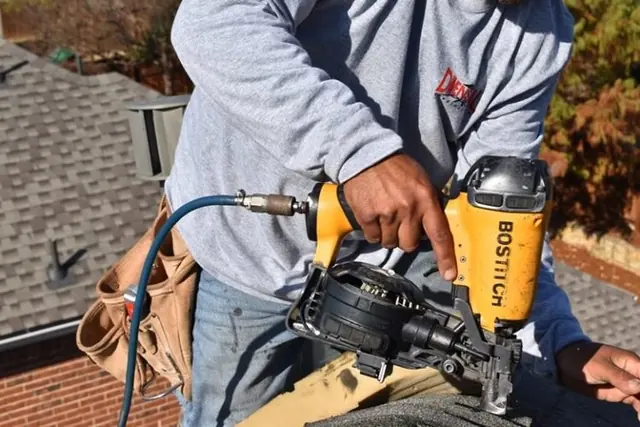
Shingles have a nailing zone and a required number of nails, often more in high-wind areas. Nails placed too high or too few per shingle are a common reason shingles blow off, and they can void the wind warranty.
Sealed shingles
Every shingle has an adhesive strip that bonds to the one below once the sun warms it. When a storm lifts a shingle and breaks that seal, it may settle back looking fine but will not hold next time. An inspection after a big wind event catches these.
Ridge caps
Ridge caps take a lot of wind. Proper ridge cap shingles, nailed correctly, hold up better than cut pieces of regular shingles.
Before storm season
After a wind storm
Look for shingles or pieces of shingle in the yard, bare spots along ridges and edges, and gutters pulled away from the house. Stay off the roof. Wind damage is often covered by homeowner's insurance, so have it inspected and documented before any repairs.
On your next roof
Ask for a shingle line with a high wind rating, installed to the manufacturer's high-wind specifications with starter strips on all edges. Impact-resistant shingles also tend to carry strong wind ratings.
Call (855) 741-ROOF for a free inspection after your next storm.